

Roof insurance deductibles can be confusing even for homeowners who’ve dealt with claims before. In Colorado, especially around Metro Denver, they work a little differently. This guide will help you understand what your deductible really means, how it affects your payout, and what factors to consider before filing a hail damage claim.
We’ll break down why deductibles are structured the way they are in Colorado, how recent laws impact your options, and what policy language you need to watch out for. This isn’t a general overview of how to file a claim or what to do after a denial. Instead, we’re focusing purely on deductibles, policy fine print, local cost realities, and how to make a smart financial call before you even pick up the phone.
What a Roof Insurance Deductible Actually Means in Colorado

Before you call your insurance company after a storm, it helps to fully understand what your deductible actually is and what it isn’t. In simple terms, your deductible is the amount you agree to pay out of pocket before your insurance company covers the rest. But in Colorado, especially for roof claims, the way deductibles are calculated and applied can be different than what you might expect.
Let’s break it down.
What Is a Roof Insurance Deductible and How Does It Work?
A roof insurance deductible is the portion of repair costs you pay before your policy kicks in. It’s not a fee you pay directly to the insurance company. Instead, it’s subtracted from your total claim payout.
Here’s how it works: if your roof damage claim is approved for $20,000 and your deductible is $2,500, the insurer pays $17,500. You’re responsible for the rest. Most homeowners pay their deductible directly to the roofing contractor as part of the job cost.
In Colorado, this becomes even more important because storm claims especially hail are the most common type of homeowner insurance claim in the state. The deductible is often the biggest out-of-pocket cost in that process.
Why Colorado Policies Often Have Percentage-Based Deductibles
In high-risk hail zones like Metro Denver, insurers often use percentage-based deductibles for wind and hail damage. This is known as a wind/hail deductible, and it’s usually based on a percentage of your home’s insured value, not a flat dollar amount.
So instead of a $1,000 or $2,500 flat deductible, you might have a 1 or 2 percent deductible. If your home is insured for $500,000, a 2 percent wind/hail deductible means you’re responsible for the first $10,000 of storm-related roof damage.
This type of deductible usually only applies to specific perils like hail or wind not to other types of claims. You’ll find this in the Coverage A Dwelling section of your policy, often listed separately from the standard all peril deductible. Always read the policy closely. And if you’re unsure, ask your insurer for a breakdown.
Does Your Deductible Change Based on Claim Type?
Yes. Not all claims carry the same deductible. In Colorado, it’s common to see separate deductibles depending on what caused the damage.
- Hail or windstorm damage usually triggers the percentage-based deductible.
- Fire damage typically falls under the flat all-peril deductible.
- Falling trees or impact damage might also be covered under the flat deductible, unless the damage was wind-driven—then the wind/hail clause might apply.
This is where policy details matter. If your roof was hit by a tree during a windstorm, your insurer might apply the wind deductible. But if the tree fell due to rot and calm weather, a flat deductible might apply instead.
Understanding this upfront helps you avoid surprise costs and makes it easier to decide whether filing a claim is even worth it.
ACV vs RCV and How They Change Your Deductible’s Impact

Understanding how your roof insurance policy is structured Actual Cash Value (ACV) vs Replacement Cost Value (RCV) is critical before you ever file a claim. While both policy types come with deductibles, they apply those deductibles very differently. And in Colorado, where hail damage is a constant threat, the wrong expectations about depreciation and payout can leave homeowners covering thousands out of pocket.
Let’s break down the key differences and how each policy type affects your deductible’s impact.
How ACV Policies Apply Depreciation Before Your Deductible
ACV policies subtract depreciation before applying your deductible. That means you’re paid based on the current market value of your damaged roof not what it costs to replace it today.
Here’s the issue: roofs in the Denver area typically age faster due to our hail-heavy weather and intense UV exposure. A 15-year-old asphalt roof might be depreciated by 50% or more. If your roof would cost $20,000 to replace, and it’s depreciated down to $10,000, your payout under ACV is calculated on that lower amount. Then your deductible is subtracted again from that already reduced figure.
So on an ACV policy:
- $20,000 replacement cost
- $10,000 depreciation
- = $10,000 ACV
- $5,000 deductible
- = $5,000 final payout
Older roofs = higher depreciation = lower net payout. You’ll shoulder the replacement gap yourself.
How RCV Policies Pay Differently and Why Deductibles Still Matter
RCV policies cover the full cost to replace your roof, but the insurance company doesn’t pay all at once. You typically get an initial ACV payout upfront, then a second payment (called the recoverable depreciation) after you complete the repairs and submit proof.
But don’t overlook the deductible. It still gets subtracted from the total RCV even though the process happens in two phases:
- Initial check = ACV amount (depreciated value)
- Final check = recoverable depreciation, minus your deductible
Using the same $20,000 roof example:
- You get $10,000 upfront (ACV)
- After work is done, you submit receipts
- Insurer reimburses remaining $10,000
- You pay $5,000 deductible
- Net payout: $15,000, you cover the other $5K
So even with RCV, your deductible directly cuts into what you receive. And in many cases, homeowners don’t realize the final payment is contingent on finishing the repairs and providing proof.
Does Your Deductible Apply Differently On ACV vs RCV Claims?
No—the deductible always reduces your total claim payout, regardless of whether you’re on an ACV or RCV policy. The difference lies in when and how the math works.
- With ACV, depreciation reduces your payout before the deductible is applied.
- With RCV, the deductible is subtracted from the full replacement cost, but the payment is split into phases.
In both cases, your out of pocket cost increases with a higher deductible. But under ACV, that effect is magnified because you’re also losing value to depreciation especially on aging roofs common in Denver.
Before you file a claim, take time to calculate both the age based depreciation and your deductible size. For many homeowners, this determines whether a claim is worth filing at all. In high-deductible zones like Colorado, it’s not uncommon for payouts to fall below the deductible entirely.
Roof Age, Materials, and Risk Factors That Influence Your Deductible
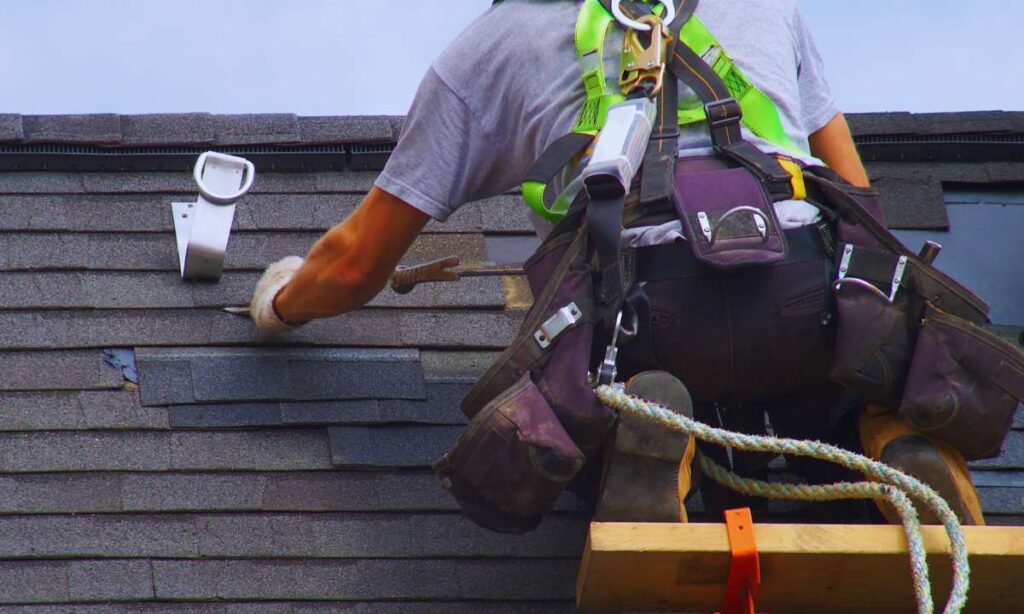
How the Age of Your Roof Affects Payouts and Deductible Weight
Older roofs often mean lower insurance payouts.
Once a roof hits 10–15 years, most insurers start factoring in depreciation. That means they won’t pay for full replacement, just the current value of the worn roof. In practical terms, if your roof is older and hail hits, the deductible might eat up most of your claim sometimes making it not worth filing at all.
Some policies also impose higher deductibles on older roofs, especially if it hasn’t been replaced within a certain timeline. Before hail season, it’s worth reviewing your roof’s install date and checking whether your policy covers replacement cost value (RCV) or just actual cash value (ACV). That single detail can swing thousands of dollars in coverage.
Does the Material of Your Roof Change Deductible Structures in Colorado?
Yes—material type affects both premiums and deductible structures.
Colorado insurers use material based risk scoring. For example, asphalt shingles (most common) are affordable but tend to get damaged more easily by hail. That can trigger higher deductibles or policy exclusions in high risk zip codes.
In contrast, impact resistant shingles, metal roofing, or concrete tiles may qualify for discounts and lower deductibles. But beware some carriers still apply a flat percentage deductible (e.g. 1–2% of your home’s value) regardless of material, especially for named-storm or wind/hail claims.
Always ask your insurer if your roof type qualifies for any discounts or higher deductible thresholds under your current coverage.
Will Insurance Still Cover an Old Roof After Hail Damage?
Sometimes, but there are limits and landmines.
In Colorado, many carriers won’t cover roofs over 15 years old unless they pass a recent inspection. Others may only offer ACV policies, meaning they’ll subtract years of wear and-=tear from the payout. So even if the roof is technically insured, the amount you get may barely cover materials, let alone labour.
Also, some policies have cosmetic damage exclusions—so if hail bruises the shingles but doesn’t cause immediate leaks, your insurance claim could be denied. This hits older roofs especially hard, since wear-and-tear makes it easier for insurers to claim “pre-existing condition.”
Bottom line? If your roof’s over a decade old and hasn’t been inspected lately, get a certified roofer out before hail season hits. You’ll know where you stand before your deductible becomes a sunk cost.
What Your Policy Actually Covers and How Deductibles Apply

Homeowners assume their policy covers hail damage but the details matter. The deductible structure, exclusions, and definitions buried in the fine print can change everything when it’s time to file a claim. Let’s break it down in plain terms, especially if you’re dealing with Colorado’s hail-prone Front Range.
Does Your Policy Cover Both Cosmetic and Functional Hail Damage?
No, most policies exclude purely cosmetic hail damage. That means if hail leaves dents on your roof or gutters but doesn’t affect how they function, your claim may be denied.
Here’s the catch: “cosmetic” isn’t always clearly defined, and insurers tend to interpret it in their favour. For example, aluminum gutters with visible dents may still “function,” so they don’t pay. But if those dents cause overflow or improper drainage? That’s a functionality issue and should be covered.
This is one of the most debated issues in Colorado hail claims, and policy language can vary by company. If you’re not sure, ask your insurer to explain what they consider cosmetic vs structural damage in writing.
When a Separate Hail Deductible Applies in the Denver Metro Area
Yes, many Colorado policies include a separate deductible for hail and wind claims. These are common in high-risk cities like Aurora, Thornton, Lakewood, and Littleton, where large hailstorms are a regular summer event.
Instead of your standard $1,000 deductible, you might see something like 1% of your dwelling coverage. On a $500,000 home, that’s a $5,000 out-of-pocket cost before insurance kicks in.
Some policies have even shifted to 2% or higher hail deductibles in hail-prone ZIP codes. The change isn’t always obvious, especially on renewals so double-check your declarations page before storm season.
How “Per-Occurrence” Deductibles Affect Multi-Damage Storms
Most homeowners insurance deductibles are “per occurrence,” meaning you only pay one deductible per event not per type of damage.
Say a single hailstorm cracks your skylight, dents your siding, and tears roof shingles. You won’t owe three deductibles just one, based on the total cost of the claim.
But there’s a nuance: if you file separate claims weeks apart for damage from the same storm (common when hidden damage shows up later), some insurers might count those as separate occurrences. That’s why early documentation and full roof inspection after a storm is critical.
When Your Deductible Does Not Apply at All
In some cases, your deductible may be waived but it depends entirely on your policy and the cause of damage.
A few examples:
- Tree limbs crashing into your roof from a windstorm may fall under a different peril category than hail and some insurers waive deductibles for specific impact events.
- Wind-driven rain that enters through a damaged roof could qualify for full coverage if it meets your policy’s criteria for “sudden accidental intrusion.”
- Emergency repairs ordered by the insurer or city might be covered at 100%, especially if your roof is deemed a safety hazard.
Always check if your carrier makes exceptions for life safety issues or state-declared disaster zones. And don’t assume you’re on the hook for the deductible ask the adjuster to confirm in writing when it does or doesn’t apply.
How to Read Your Policy So You Know Exactly What You’ll Pay

Your policy isn’t written to be easy. It’s dense, confusing, and loaded with terms that can quietly shift thousands of dollars of cost onto you. If you’ve never looked closely at yours or only skimmed the deductible line here’s how to dig deeper and find out what your policy actually makes you pay before a claim gets covered.
Where Deductible Information Appears in Your Policy
Your deductible is almost always listed on the declarations page that’s the summary at the start of your policy. But don’t stop there. That page only gives the number, not the context.
You also need to check:
- Endorsement pages – These are add-ons that change or override standard coverage. Hail-specific deductibles or cosmetic damage exclusions often hide here.
- The “Loss Settlement” section – This explains how your insurer calculates payouts, and whether your deductible comes off the top before or after depreciation.
If you can’t find this language, ask your agent for help. Better to know now than mid-claim.
Key Policy Terms That Change Deductible Outcomes
A few terms carry real financial weight especially when paired with how your deductible applies:
- Actual Cash Value (ACV): Pays out depreciated value, not full replacement. Your deductible applies after value is reduced.
- Replacement Cost Value (RCV): Pays to fully replace damaged materials, assuming you follow claim steps to get full reimbursement.
- Named Peril Policy: Only covers damage from events listed in the policy. If hail isn’t named clearly, the claim might not be accepted—and your deductible becomes irrelevant.
- Cosmetic Damage Exclusion: If included, this clause voids coverage for visible but non-functional damage, making your deductible meaningless for minor hail impact.
Each of these terms shifts who pays your insurer or you.
Policy Language That Often Surprises Denver Homeowners
These three lines of text cause more headaches than anything else on Colorado roof claims:
- Anti-Concurrent Causation Clauses: These let insurers deny coverage if two damages happen at once, even if one is covered. For example, if wear and tear (uncovered) and hail (covered) both contribute, they might deny both.
- Wear and Tear Exclusion: Most policies don’t cover deterioration from age or neglect, and they’ll use this to reduce payouts or reject parts of a claim.
- Roof Age Limits: Some policies cut coverage for roofs older than 15 years, or apply higher deductibles automatically. If yours is 20+ years old, double-check this section before storm season.
You don’t need to become an insurance expert but you do need to know what your specific policy will or won’t pay for. That starts by reading the small print before you’re staring at a tarp and a bill.
When Filing a Claim Doesn’t Make Financial Sense
Most homeowners don’t realize that filing a hail claim isn’t always the smart move. In fact, it can end up costing you more than it saves especially here in Denver where hailstorms are common and insurance companies are watching your claim history closely.

Is Filing a Roof Claim Worth It If Repairs Are Close to the Deductible?
If the cost of repair is close to or just over your deductible, filing a claim may not make financial sense. Why? Because you’re responsible for that deductible no matter what. If your roof repair is $6,000 and your hail deductible is $5,000, you’d only be reimbursed $1,000. Not only is that a small return, but it also puts a claim on your record, which could lead to higher premiums down the road.
Here’s a rule of thumb: If the damage is less than 1.5x your deductible, get a second opinion before filing. Sometimes, paying out-of-pocket now avoids long-term costs that quietly stack up.
Why Small Repairs Can Cost More After Claim Surcharges
Insurance companies track every claim you make even the small ones. In Colorado, multiple claims within a short period can lead to claim surcharges or even dropped coverage. Once flagged, you might face:
- Higher renewal premiums
- Fewer policy options when switching insurers
- Extra scrutiny next time you file
So a $3,000 repair could end up costing more than that over time once you factor in future rate hikes. That’s why small cosmetic hail hits often aren’t worth a claim.
Cases Where Filing a Hail Claim Is Not Recommended
There are plenty of times when hail looks worse than it is—especially in areas like Highlands Ranch, Parker, and Centennial where roofs take frequent cosmetic hits.
Avoid filing if the damage includes:
- Small granule loss with no exposed matting
- Shallow dents in soft metal (like vents or gutters) with no functional damage
- Cosmetic-only bruising that doesn’t compromise the roof’s waterproofing
Many policies now exclude purely cosmetic hail damage. Filing for this type of wear can trigger a claim denial and still affect your insurance record.
Bottom line: If your roof still works as it should and you’re not well above the deductible, take a step back. Get a licensed roofer to inspect it first and explain what’s really at stake. Don’t let a minor storm leave you with a major premium increase.
Colorado Laws Homeowners Should Know Before Filing

Understanding the laws that apply before filing a roof insurance claim in Colorado can help you avoid scams, protect your finances, and make informed decisions especially in hail-prone cities like Aurora, Thornton, and Lakewood. Unlike general advice, these are legal protections specific to Colorado homeowners that directly affect your roofing contracts, deductibles, and insurer obligations.
Colorado’s Deductible Fraud Law and Why It Protects Homeowners
Colorado law makes it illegal for contractors to waive, absorb, or cover your insurance deductible. This is outlined under CRS 6-22-105 and was designed to crack down on roofing scams after hail events. If a roofer says “we’ll handle your deductible,” they’re likely violating state law and you could be part of an insurance fraud investigation without realizing it.
Legitimate contractors must show the full deductible on the invoice. Your insurer can demand proof you paid it. If you can’t, they may deny or delay your claim. This law protects homeowners from inflated estimates, insurance fraud, and post-claim penalties. It also ensures you’re working with reputable professionals.
Why Insurers Cannot Raise Your Deductible After a Storm Event
Colorado prohibits retroactive changes to your deductible or policy coverage after a loss has occurred. This means your insurance provider can’t increase your out of pocket responsibility for hail damage after the storm hits. Whatever deductible was listed in your declarations page at the time of the event is what stands.
This law protects you from post-loss surprises and gives you a fair baseline to evaluate whether filing a claim makes financial sense. However, it’s still essential to confirm whether your policy has a separate wind/hail deductible, as that could be a percentage (e.g., 1% of home value) rather than a fixed amount.
How Colorado Regulates Roofing Contracts After Hailstorms
Following an influx of storm-chasing contractors, Colorado passed HB-1233 to set strict rules on roofing contracts. Key requirements include:
- Written estimates: Roofers must provide a written contract with detailed costs before starting work.
- Cancellation window: You have 72 hours to cancel a roofing contract without penalty.
- Insurance disclosure: Roofers must include a notice that it’s illegal for them to waive or absorb your deductible.
These laws give homeowners time to vet roofing companies and avoid signing under pressure. If a contractor violates these requirements, you can report them to the Colorado Attorney General or the Department of Regulatory Agencies (DORA).
Common Questions About Roof Insurance Deductibles in Denver
Do You Pay the Deductible to the Roofer or the Insurance Company?
You pay the deductible to the roofer, not your insurer.
After your insurance company approves the claim, they issue payment minus your deductible. It’s then your responsibility to pay the deductible portion directly to the contractor. Roofing contractors in Colorado are required by law to collect it they cannot waive, absorb, or discount your deductible under CRS 10-4-120. Any offer to do so is illegal and could void your policy or expose you to fraud allegations.
How do insurance companies verify deductible payments?
Some insurers won’t release final payment until they see proof you paid the deductible like a receipt or cleared check to your contractor. This step isn’t always disclosed upfront but can delay funds if skipped.
Can a Roofer Help Lower My Deductible?
No, it’s illegal for a roofer to lower, waive, or cover your deductible in Colorado.
House Bill 19-1233 makes this crystal clear. Any contractor who offers to pay your deductible through fake invoices, rebates, or marketing credits is committing deductible fraud. Even if it seems like a good deal, it puts both you and the contractor at legal and financial risk. A reputable Denver roofer will never suggest this.
Why Is My Roof Deductible Higher Than My Home Deductible?
Because roof damage often falls under a separate wind or hail deductible. Many Colorado homeowners have split deductibles: one for general claims (like theft or water damage) and a second, higher one for wind and hail usually 1–2% of your dwelling coverage.
If your home is insured for $400,000, that means your roof deductible could be $4,000–$8,000 depending on your policy. Check your declarations page and look specifically for “wind/hail” or “named storm” deductible language.
Does Filing a Hail Claim Raise My Premiums Every Time?
Not necessarily, but it can.
In Colorado, hail is considered an “act of God,” and insurers can’t penalize you directly for a single hail claim.
However, repeated hail claims or living in a high-risk ZIP code can lead to higher rates over time. Insurance companies often raise area-wide premiums after major hail events in Denver, even if you didn’t file a claim. So while the first claim might not impact your individual rate, patterns and zip code risk do matter.
Why Does My Neighbor Have a Different Deductible for the Same Storm?
Because deductibles vary by policy, carrier, and coverage limits. Even two homes on the same street may have different deductibles if:
- One uses a percentage-based wind/hail deductible and the other has a flat dollar amount
- They chose different dwelling coverage values (affecting % deductibles)
- Their policies were written by different insurers with different underwriting risk
- One homeowner opted for a cheaper premium in exchange for a higher deductible
It’s also possible your neighbor has updated coverage. Some insurers change deductible structures yearly in storm-prone areas. Always compare policies carefully, not just prices.
Key Takeaways About Deductibles for Denver Roof Claims
- Your deductible is your legal share of the repair cost, and you must pay it out of pocket no matter what a contractor promises. In Colorado, waiving or rebating deductibles is illegal and can void your claim.
- Don’t file if the repair cost is near your deductible. If your $1,500 deductible covers most or all of the repair bill, a claim may hurt more than help by increasing premiums or creating a loss history.
- Cosmetic damage doesn’t always justify a claim. Surface-level granule loss, light dents on vents, or non-functional hail damage often won’t meet insurer thresholds and may not be worth reporting.
- Future claims and premiums can be impacted. Even if your first hail claim is covered, it could influence your rates, your insurer’s renewal decision, or your ability to switch carriers later.
- State law protects you from shady roofing tactics. Colorado requires written contracts, provides cancellation windows, and prohibits deductibles from being “absorbed” by the roofer.
- You don’t pay the deductible to your insurer. It goes directly to your contractor after the claim is approved usually once work begins or is complete.
- Roofer discounts can’t legally reduce your deductible. Any offer to “eat the deductible” is not only fraudulent it puts your policy and claim funds at risk.
- Each homeowner’s deductible may differ. Premium choices, policy terms, and endorsements vary widely even on the same street or for the same storm.
Next Steps for Denver Homeowners Reviewing Their Policies
Understanding your deductible is just as important as knowing what your policy covers. Before you file a roof claim in Denver, it’s worth stepping back to ask: does the repair cost truly exceed your deductible? If it’s close, filing may not make financial sense especially once you factor in potential premium increases or the impact on your claim history. That’s why a pre-claim roof inspection can be so valuable. It gives you a clear picture of the damage and helps you make a better decision without jumping the gun.
Even with your policy in hand, the fine print isn’t always easy to decode. Terms like actual cash value, replacement cost, or cosmetic exclusions can affect your payout in ways that aren’t obvious. That’s where a local roofing expert comes in. Not to sell you something but to walk you through how your specific coverage plays out on a real roof. The goal isn’t just to get a claim approved. It’s to know when filing helps and when it could backfire.
If you’re feeling stuck between calling the insurance company or letting it go, you don’t have to guess. Talking with someone who sees these situations every day can give you the clarity you need to make the right call for your roof and your wallet. You can always start by reaching out to a local roofing professional like Abraham Benson Roofing in Denver for honest insight before making any major moves.

Recent Comments