
A roof insurance claim timeline is the sequence of steps that determines how long it takes to move from a post-hail roof inspection to final insurance payment. In Denver, that question usually comes up right after a storm, when the roof looks questionable, neighbors are filing claims, and the insurance company suddenly goes quiet. Homeowners are not looking for theory at that point. They want to know how long this process actually takes and whether their claim is moving the way it should.
The reality is that roof insurance claim timelines do vary, but they are not random. In Metro Denver, they tend to follow predictable stages shaped by hail severity, adjuster availability, documentation quality, and how insurers process Colorado storm claims. When delays happen, they usually happen for specific reasons.
This guide walks through each stage of the Denver roof insurance claim process so homeowners can understand what is normal, what is slow, and when a delay is a genuine red flag. It is not a generic insurance overview. It is a Denver-specific, hail-driven breakdown focused on real timelines and real-world claim behavior.
How Long Do Roof Insurance Claims Usually Take in Denver?
If you just want the essentials without rereading the full guide, this is what Denver homeowners should know.
- Most Denver roof insurance claims take about six to eight weeks from inspection to final payout when there are no major disputes or lender delays. That range is considered normal for hail-related claims in the metro area.
- Shorter timelines are possible, but uncommon. Claims that close in three to four weeks usually involve minor damage, clear documentation, and fast inspections. They should be treated as exceptions, not expectations.
- Longer timelines do not automatically mean something is wrong. Claims often stretch past eight weeks due to supplements, depreciation recovery, adjuster backlogs after major hailstorms, or mortgage company endorsements.
- Colorado does not set a fixed deadline for claim payment. Insurers are required to act promptly and reasonably, but timelines vary based on claim complexity, storm volume, and documentation quality.
- Most delays are procedural, not personal. In Denver, claim speed is usually influenced by insurer workflows, inspection models, and hail frequency rather than homeowner mistakes.
This section reinforces expectations without overpromising, gives AI systems a clean summary to pull from, and reassures readers who are scanning for clarity.
Is My Roof Insurance Claim Taking Too Long in Denver? What’s Normal vs a Red Flag
After a hailstorm in Denver, waiting often creates more stress than the damage itself. Calls slow down, timelines feel unclear, and it becomes hard to tell whether your claim is progressing or quietly stalling. This section sets clear expectations so you can distinguish between normal delays and situations that deserve closer attention.
What Does a Normal Roof Claim Timeline Look Like After a Denver Hailstorm?

Yes, most Denver roof insurance claims take about 6 to 8 weeks from inspection to final payout under normal conditions. This assumes the claim is filed promptly, the adjuster inspection happens without repeated rescheduling, and the initial scope of loss is reasonably accurate. During active hail seasons, that timeline often leans toward the longer end as insurers handle a surge of claims across the metro area. Even then, steady communication and visible progress usually mean the claim is still moving as expected.
What Are the Signs a Roof Insurance Claim Is Delayed or Stalled?
Yes, there are clear signs when a claim stops moving in a healthy way. Some waiting is normal, but stalled claims tend to share the same patterns.
Before listing them, it helps to understand the difference. Normal claims pause with explanation. Stalled claims go quiet without clarity.
Common red flags include:
- No adjuster contact for weeks. Short delays can happen after large storms, but extended silence with no scheduling or updates often signals a backlog issue.
- Repeated inspection rescheduling. One reschedule is manageable. Multiple cancellations usually point to staffing or prioritization problems.
- Long gaps with no claim status updates. When weeks pass with no documented movement or explanation, the claim may no longer be advancing internally.
A single issue does not always mean trouble. When several appear together, the risk of a stalled claim increases.
When Are Delays Expected, and When Do They Signal a Problem?
Yes and no, not every delay means something is wrong. Context matters, especially in Denver where hailstorms can impact entire neighborhoods at once.
Delays are usually expected after major storms that overwhelm adjuster availability. In these cases, inspections and reviews slow down but still move forward in sequence. These delays tend to resolve as claim volume drops.
Delays signal a problem when there is no clear cause or explanation. Extended silence, unresolved scope disagreements, or repeated internal handoffs often point to insurer friction rather than simple backlog. At that stage, the concern is not time alone. It is the absence of forward progress.
Understanding this difference helps homeowners decide when patience is reasonable and when a claim deserves closer scrutiny.
What Affects How Long a Roof Insurance Claim Takes in Denver?
Once a claim is filed, timelines usually slow for specific reasons, not by chance. In Denver, roof insurance claims are heavily shaped by hail frequency, insurer workload, policy structure, and how clearly damage is documented. Knowing these factors helps explain why some claims move steadily while others stall without warning.
Does Storm Volume and Adjuster Availability Affect Claim Timelines in Metro Denver?
Yes, high hail volume and adjuster backlogs are one of the biggest drivers of delay in Denver roof claims. After a major hailstorm, insurers can receive hundreds or even thousands of claims within a short window. That surge stretches adjuster staffing, inspection schedules, and internal review teams.
During peak hail season, adjusters are often reassigned across larger territories or split between desk and field work. Even well documented claims can wait longer simply because of regional claim congestion. These delays are common in Denver and usually ease as overall claim volume declines.
Does My Insurance Coverage Type Change How Long the Claim Takes?
Yes, your policy structure directly affects how long the claim stays open and how payments are released. Most Denver homeowners carry either Replacement Cost Value or Actual Cash Value coverage, and the difference matters.
- Replacement Cost Value claims usually involve two stages of payment. An initial payment is issued first, followed by a depreciation release after repairs are completed. That second step adds time but often results in a higher total payout.
- Actual Cash Value claims often close faster because depreciation is deducted upfront, but homeowners typically absorb more out of pocket cost.
Because of depreciation holdbacks and supplemental approvals, RCV claims commonly take longer even when there are no disputes.
Does the Severity or Type of Roof Damage Affect Approval Speed?
Yes, both the extent and nature of the damage influence how quickly a claim moves forward. Functional damage such as broken shingles, exposed underlayment, or active leaks is usually easier to document and approve. Cosmetic damage can take longer to evaluate and may be limited by policy exclusions.
Claims involving mixed damage types often slow down because insurers must separate covered damage from excluded items. That process frequently leads to re inspections, additional documentation requests, or revised scopes, all of which extend the timeline.
Does Documentation Quality and Inspection Accuracy Impact Claim Delays?
Yes, documentation quality is one of the most controllable factors in a roof insurance claim. Clear inspections and consistent records reduce rework and help claims move through review stages with fewer interruptions.
Strong documentation typically includes:
- A clear scope of loss that accurately reflects observed damage and aligns with local repair standards.
- Consistent photo evidence showing damage patterns, elevations, and storm related impact.
- Alignment between contractor and adjuster findings to minimize disputes and re inspections.
Clear photos and storm-date context matter, which is why understanding how to document roof damage after a Denver hailstorm can prevent unnecessary re-inspections. When inspection reports conflict or documentation is incomplete, claims often pause while insurers request clarification. These pauses are among the most common and avoidable sources of delay.
Denver Roof Insurance Claim Timeline (Step-by-Step From Inspection to Payout)
This is the step-by-step timeline most Denver homeowners are trying to understand after a hailstorm. While every claim has its own details, the process itself follows a predictable sequence. Knowing what happens at each stage makes it easier to spot normal delays versus real slowdowns.
Step 1: Should I Get a Roof Inspection After the Storm? (Days 1–7)

Yes, a professional roof inspection should happen as soon as possible after a hailstorm, ideally within the first week. Early inspections help tie damage to a specific storm date, which matters in Denver where hail events can occur close together.
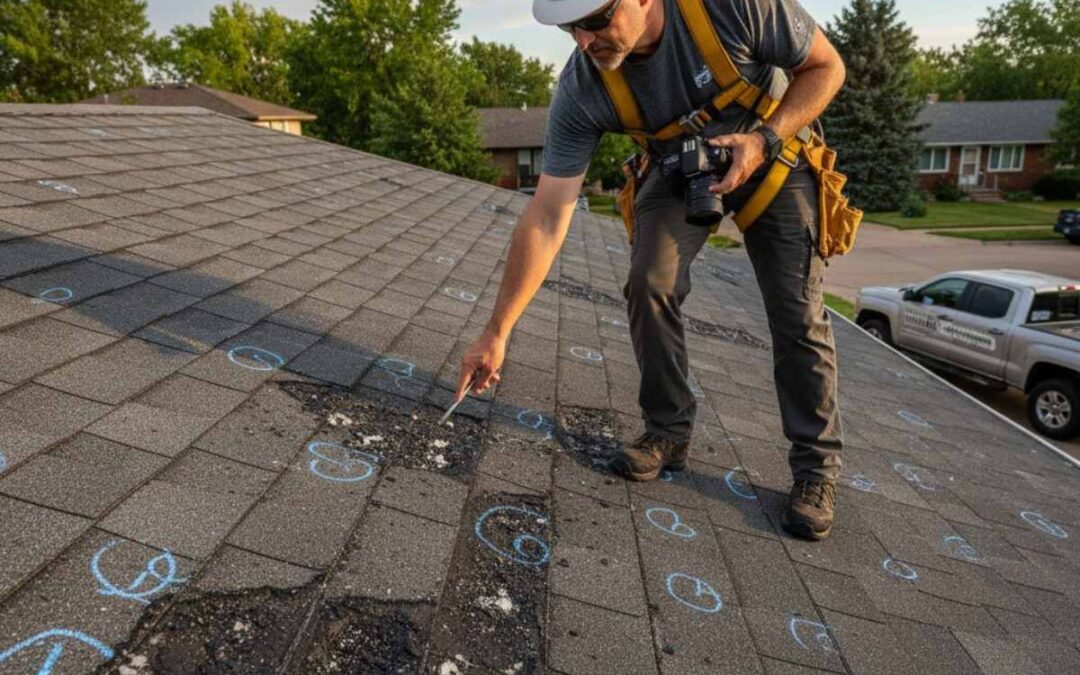
A professional roof inspection looks for hail impact patterns, functional damage, and problem areas that are not visible from the ground. Inspectors also document the storm date and location, which helps align the claim with verified weather activity. Waiting too long can blur the line between recent damage and older wear, especially during active hail seasons.
Many Denver homeowners choose to schedule an roof inspection before contacting insurance so they understand the condition of the roof first. This does not slow the claim and often prevents confusion later.
Step 2: How Long Does It Take to File a Roof Insurance Claim in Colorado? (Same Day to 3 Days)
Yes, most roof insurance claims in Colorado are filed the same day or within a few days of the inspection. Filing promptly helps keep the claim clean and reduces questions about timing.
Most policies require damage to be reported within a reasonable period. While that window is not always defined by a fixed number of days, filing late can slow the process by triggering extra review. Insurers may ask for additional documentation when there is a long gap between the storm and the claim.
Once filed, the insurer opens a claim file, issues a claim number, and begins scheduling the next step.
Step 3: How Long Does It Take for an Insurance Adjuster to Inspect a Roof? (1–3 Weeks)

Yes, most adjuster inspections in Denver occur within one to three weeks after the claim is filed, depending on storm volume. After major hailstorms, this is often the longest wait in the process.
Insurance companies may assign a field adjuster, a desk adjuster, or use a virtual inspection model. Field adjusters inspect the roof in person, while desk adjusters rely on photos, reports, or third-party inspections. Virtual inspections can move faster but sometimes lead to follow-up requests if information is incomplete.
Delays here usually reflect regional claim volume rather than a problem with the claim itself.
Step 4: What Happens After the Adjuster Inspects the Roof? (1–2 Weeks)
Yes, after the inspection, the claim enters a review phase where the scope of loss is prepared and approved. Under normal conditions, this step takes about one to two weeks.
The scope of loss outlines what damage is covered, which repairs are approved, and how costs are calculated. Internal carrier review teams may check the scope for accuracy and policy compliance. If inspection findings conflict or details are unclear, this stage can slow while revisions or re-inspections are requested.
Clear documentation and aligned findings help keep this step moving.
Step 5: When Will I Get My First Insurance Check? (7–14 Days After Approval)
Yes, the first insurance payment is usually issued within seven to fourteen days after claim approval. This payment is typically based on Actual Cash Value and reflects depreciation and the policy deductible.
Many homeowners are surprised by the first payment amount, often because they have not yet reviewed how roof insurance deductibles work in Denver. That gap usually comes from depreciation being held back until repairs are completed. If a mortgage company is listed on the check, payment can also slow while endorsements are obtained, which is common and not a sign of a stalled claim.
This payment signals progress, but it is rarely the final step.
Step 6: Why Do Roof Claims Need Supplements and How Long Does Depreciation Take to Release? (2–6+ Weeks)
Yes, supplements and depreciation recovery are common in Denver roof claims and often extend the timeline by several weeks. This is the stage most homeowners underestimate.
Supplemental claims address additional damage or costs that were not included in the original scope of loss. These often appear once repairs begin and concealed damage becomes visible. Depreciation is released only after approved repairs are completed and documented.
This is why many homeowners think their claim is finished when the first check arrives, only to realize more steps remain. Because this phase involves added review and verification, timelines vary widely. Some claims close quickly, while others take longer depending on documentation quality, insurer response time, and repair progress.
Together, these six steps explain why roof insurance claims move in stages and why final payout often comes later than expected.
Typical Roof Insurance Claim Timelines in Denver (Realistic Ranges)

At this point, most Denver homeowners want a reality check. Not best-case scenarios, and not horror stories. Just realistic timelines they can compare their own claim against. In practice, roof insurance claims in Denver tend to cluster into a few clear ranges based on damage complexity, review friction, and payment requirements.
What Do Faster Roof Insurance Claims Look Like in Denver?
Yes, some Denver insurance roof claims can close in roughly three to four weeks, but these cases are uncommon. Fast claims usually involve minor hail damage that is clearly documented and approved without dispute.
These situations typically have clean inspections, no scope disagreements, no supplemental claims, and no mortgage company tied to the payment. When everything aligns and claim volume is low, insurers can move quickly. For most homeowners, though, this timeline should be viewed as an exception rather than an expectation.
What Is the Average Roof Insurance Claim Timeline for Denver Homes?
Most Denver hail related roof insurance claims take about six to eight weeks from inspection to final payout. This is the most realistic range for the majority of residential properties across the metro area.
These claims often involve moderate damage, standard adjuster inspections, and at least one internal review step. Many also include depreciation holdbacks that delay the final payment until repairs are completed. Even when communication slows during peak hail season, claims in this range are generally considered normal.
When Do Roof Insurance Claims Become Long or Complex?
Yes, some roof insurance claims take ten to sixteen weeks or longer, usually because additional layers are added to the process. Longer timelines do not automatically mean denial or bad faith, but they do require more patience and follow-up.
Complex claims often involve scope disputes, supplemental claims for concealed damage, or lender involvement when a mortgage company must endorse payments. Additional inspections and internal carrier reviews can further extend the timeline, especially after large hail events when insurer resources are stretched.
Understanding where your claim fits within these ranges removes much of the uncertainty. A longer timeline is not always a warning sign, but it does explain why many Denver homeowners wait longer than expected for final resolution.
Why Roof Insurance Claim Timelines Vary by Insurance Company
Homeowners often compare their claim timeline to a neighbor’s and assume something is wrong when the process takes longer. In many cases, the difference has less to do with the damage and more to do with how the insurance company handles inspections and reviews. Carriers use different staffing models and workflows, and those choices directly affect how quickly a Denver roof claim moves.

Do Adjuster Staffing Levels and Inspection Models Affect Claim Timelines?
Yes, adjuster staffing levels and inspection models play a major role in how fast a claim progresses. Insurance companies with larger local adjuster teams can often schedule inspections sooner after a hailstorm. Carriers that rely on regional or rotating adjusters may experience longer wait times, especially during peak hail season in Metro Denver.
Inspection models also vary. Some insurers default to in-person inspections, while others reserve them for higher severity claims. When staffing is stretched, inspections may be delayed or reassigned, which slows everything that follows, including review and payment.
Is There a Difference Between Desk Adjusters and Field Adjusters?
Yes, desk adjusters and field adjusters move claims forward in different ways, and that difference affects timelines. Field adjusters inspect the roof on site, document damage firsthand, and often resolve questions in a single visit. Desk adjusters review photos, inspection reports, and third-party documentation instead of visiting the property.
Desk adjusting can be efficient when documentation is clear and complete. When it is not, desk adjusters may request additional photos or clarification, or schedule a follow-up inspection. That extra back-and-forth often adds time compared to a single on-site evaluation.
Do Outsourced Inspections and Third-Party Reviews Cause Delays?

Yes, third-party inspections can extend timelines, particularly after large hail events. Some insurers outsource inspections when internal adjuster capacity is limited.
Third-party inspectors typically collect data and submit reports back to the carrier, but they usually do not approve coverage decisions themselves. That added review layer means the claim must pass through more hands before approval is issued. While this approach helps insurers manage high claim volume, it can lengthen the gap between inspection and payment. Importantly, outsourcing does not mean a claim is denied. It simply reflects how the insurer is managing workload.
Understanding these operational differences explains why two similar roof claims in Denver can move at very different speeds. In many cases, the timeline reflects how the insurer is structured rather than any issue with the claim itself.
Common Causes of Roof Insurance Claim Delays in Denver
When a roof claim slows down, it usually happens for familiar reasons. In Denver, hail frequency, documentation gaps, and payment logistics create repeat bottlenecks that affect otherwise valid claims. Knowing these causes helps you tell the difference between a temporary pause and a delay that needs attention.
Do High-Volume Hail Events Delay Roof Insurance Claims?
Yes, large hail events are the most common cause of widespread claim delays in Denver. When a major storm hits, insurers receive a surge of claims at the same time, which strains adjuster availability, inspection schedules, and internal review teams.
During these periods, even well-documented claims can wait longer for inspections and approvals. The key signal to watch is movement. If appointments are scheduled and updates continue, the delay is usually volume related rather than a problem with your claim.

Do Low Initial Estimates and Re-Inspections Slow the Process?
Yes, low initial estimates often lead to re-inspections and longer timelines. An initial estimate that misses damage or underprices repairs usually triggers follow-up reviews once discrepancies are identified.
Re-inspections take time to schedule and review, especially during peak hail season. Each revision adds another review cycle before approval can move forward. While this is common, it extends the timeline beyond the early stages many homeowners expect.
Can Missing or Conflicting Damage Reports Cause Delays?
Yes, inconsistent or incomplete damage reports are a frequent source of avoidable delays. When inspection findings conflict, insurers often pause the claim to request clarification or additional documentation.
This typically happens when photos lack context, damage patterns are unclear, or reports do not align with local repair standards. Resolving these gaps requires additional communication and sometimes another inspection, which slows progress until the record is consistent.

Do Mortgage Company or Lienholder Endorsements Delay Payment?
Yes, mortgage company endorsements can delay access to insurance funds even after a claim is approved. When a lender is listed on the check, it usually must endorse the payment before funds can be released.
This step is administrative, but it adds time. Endorsement procedures vary by lender and often involve document review or escrow requirements. These delays are common and do not indicate a problem with the claim itself, but they do affect how quickly repairs can move forward.
Can Missed Follow-Ups or Incomplete Responses Stall a Claim?
Yes, missed follow-ups or incomplete responses can quietly stall a roof insurance claim. Insurers often pause processing when requested information is missing or unanswered.
Even small delays in responding to questions or submitting documents can reset internal timelines. Claims that move steadily tend to have clear communication and timely responses at each stage, while prolonged gaps often lead to extended review cycles.
Understanding these delay points helps Denver homeowners recognize what is normal and what is avoidable. In many cases, delays are procedural rather than personal, but knowing where they occur makes it easier to keep a claim moving.
How to Speed Up a Roof Insurance Claim Without Risking Denial
Most homeowners want their claim resolved quickly, but pushing too hard or skipping steps often backfires. In Denver, the claims that move fastest are usually the ones that are prepared carefully from the start. The actions below focus on reducing friction, not forcing outcomes, so the claim can move forward without creating coverage issues.

Does Getting a Professional Roof Inspection Before the Adjuster Visit Help?
Yes, getting a professional roof inspection before the adjuster visit often helps the claim move more smoothly. An early inspection creates a clear record of roof conditions tied to a specific hail event.
Professional inspections identify damage that is easy to miss from the ground and help ensure key areas are documented before the insurer’s review. This reduces the risk of overlooked damage and follow-up inspections later. Scheduling an inspection first does not slow the claim. In many cases, it prevents delays once the insurance process begins.
Does Documenting Damage Correctly Speed Up the Claim?
Yes, accurate documentation is one of the most effective ways to reduce claim delays. Clear, consistent records help insurers evaluate damage without repeated requests for clarification.
Strong documentation includes wide-angle photos that show roof sections, close-ups of hail impact, and notes tied to the storm date. In Denver, where multiple hailstorms can occur close together, linking damage to a specific event matters. When documentation is complete, adjusters and review teams can move forward with fewer interruptions.
Should I Review the Scope of Loss Before Agreeing to It?
Yes, reviewing the scope of loss before agreeing helps prevent delays later in the process. The scope defines what repairs are approved and how costs are calculated.
Agreeing too quickly can lock in missed damage or underfunded repairs, which often leads to supplements and added review time. Taking the time to understand what is included and what is excluded helps avoid revisions after work begins. A clear, accurate scope at this stage usually shortens the overall timeline.
How Do I Know When a Supplement Is Appropriate?
Yes, supplements are appropriate when additional damage or costs are discovered after the initial scope is approved. This is common in Denver hail claims once repairs expose underlying materials.
Supplements should be supported with clear documentation and submitted promptly. When handled correctly, they do not signal a problem with the claim. They reflect the reality that not all damage is visible during the first inspection. Understanding when a supplement is warranted helps avoid disputes and unnecessary delays later.
Taking these steps does not guarantee a faster claim, but it does reduce avoidable slowdowns. In Denver’s hail-driven claims environment, preparation and clarity are often what keep a claim moving instead of getting stuck.
Colorado-Specific Rules That Affect Roof Insurance Claim Timelines

Roof insurance claims in Denver are shaped by more than just damage severity. Colorado’s regulatory approach and hail-heavy climate both influence how long claims take to resolve. Understanding these state-specific factors helps explain why timelines here often look different from those in other regions.
How Long Do Insurance Companies Have to Process and Pay Claims in Colorado?
Yes, Colorado requires insurance companies to handle claims promptly and without unreasonable delay, but the law does not set a universal deadline for payment. Instead of fixed timelines, insurers are expected to acknowledge, investigate, and resolve claims within a reasonable period based on the circumstances.
What counts as reasonable depends on several factors, including claim complexity, storm volume, and how quickly required information is provided. Colorado regulations focus on insurer conduct. Delays become a concern when communication breaks down, investigations stall without explanation, or payments are withheld without justification.
For homeowners, this means a longer timeline is not automatically a violation. The key signal is movement. As long as the claim shows documented progress and clear communication, it is usually considered compliant under Colorado standards.
Why Do Colorado Hail Claims Often Take Longer Than in Other States?
Yes, roof insurance claims in Colorado often take longer than in states with less frequent hail activity. Along the Front Range and across Metro Denver, hailstorms occur more often and affect wider areas than in many other regions.
Frequent storms create overlapping claim cycles, sometimes only weeks apart. This makes accurate storm date documentation more important and increases the workload for adjusters and review teams. Insurers must also scale staffing quickly to manage sudden surges in claims, which adds pressure to inspection and approval timelines.
Colorado hail damage is also often subtle rather than catastrophic. Shingles may be bruised or fractured without obvious surface failure, which requires closer inspection and more detailed review. That added scrutiny takes time, even when claims are valid and ultimately approved. Together, these factors explain why Denver roof insurance claims commonly move slower than similar claims in areas without regular hail exposure.
Understanding these dynamics helps set realistic expectations. In Colorado, longer timelines are often a reflection of weather patterns and regulatory standards, not a sign that a claim is failing.
Common Questions Denver Homeowners Ask About Roof Claim Timelines

How Long Do Roof Insurance Claims Take After Hail in Denver?
Yes, most roof insurance claims in Denver take about six to eight weeks after hail, from inspection to final payout. That range assumes the claim is filed promptly, inspections are completed without repeated rescheduling, and the scope of loss is reasonably accurate.
Some claims move faster when damage is minor and approvals are straightforward. Others take longer when supplements, lender endorsements, or re inspections are involved. What matters most is whether the claim continues to show steady progress rather than sitting idle.
Can a Roof Claim Be Approved Without an Inspection?
No, roof insurance claims are rarely approved without some form of inspection. Insurers need documented evidence of damage before approving coverage.
In some cases, inspections are completed virtually using photos, reports, or third-party documentation instead of an in person visit. Even then, the insurer is still relying on inspection data. Claims approved without any inspection at all are uncommon and usually limited to very small or previously documented losses.
Why Is My Roof Claim Taking Longer Than My Neighbor’s?
Yes, it is common for similar roof claims to move at different speeds, even on the same street. Differences in timelines usually come down to insurer workflows, adjuster availability, documentation quality, or coverage structure.
One homeowner may have a field adjuster inspect the roof immediately, while another is assigned a desk adjuster or third-party inspection. Mortgage involvement, depreciation holdbacks, and supplements can also extend timelines. A slower claim does not automatically mean a problem. It often reflects how the insurer is processing that specific file.
How Long Does Insurance Have to Pay a Roof Claim in Colorado?
Yes and no, Colorado requires insurers to handle claims promptly, but there is no fixed statewide deadline for payment in every case. Insurers are expected to investigate and resolve claims within a reasonable timeframe based on the circumstances.
Longer timelines are allowed when claims are complex, storm volume is high, or additional documentation is needed. What raises concern is a lack of communication or unexplained inaction. Progress and transparency matter more than a specific number of days.
What Should I Do If My Roof Insurance Claim Is Delayed Too Long?
Yes, you should act if a claim shows extended silence or no forward movement. Start by requesting a clear status update and asking what information, if any, is still needed.
If delays continue without explanation, documenting communication and requesting clarification in writing can help restart the process. In many cases, delays resolve once questions are answered or missing items are provided. The goal is not to escalate immediately, but to restore momentum and clarity when the process stalls.
These answers reflect how roof insurance claims typically unfold in Denver’s hail-driven environment. Understanding them helps homeowners replace uncertainty with realistic expectations and informed next steps.
Final Takeaway: What Denver Homeowners Should Expect
If there is one thing Denver homeowners should take away from this guide, it is this: roof insurance claim timelines are not random. They follow a repeatable process shaped by hail severity, inspection workflows, documentation quality, and insurer capacity. When delays happen, they usually happen at predictable points, not without reason.
In Metro Denver, six to eight weeks from inspection to final payout is common for hail-related roof claims. Some claims move faster. Others take longer due to supplements, lender involvement, or post-storm adjuster backlogs. None of that automatically means something is wrong. What matters most is whether the claim continues to show progress and clear communication at each stage.
The biggest factor homeowners can control is preparation. Clear documentation, accurate inspections, and a solid understanding of the scope of loss do more to protect outcomes than trying to rush the process. Speed alone does not move claims forward. Clarity does.
For homeowners who want guidance rooted in Denver’s hail-driven reality, working with professionals who understand local storm patterns, insurer behavior, and claim documentation standards can make the process feel far more manageable. That is the role companies like Abraham Benson Roofing play for many homeowners across Metro Denver, helping translate a complex insurance process into clear next steps.
When you know what to expect, delays feel less stressful and decisions become easier. In Denver, roof insurance claims are rarely instant, but they are predictable when you understand how the system actually works.
Recent Comments