
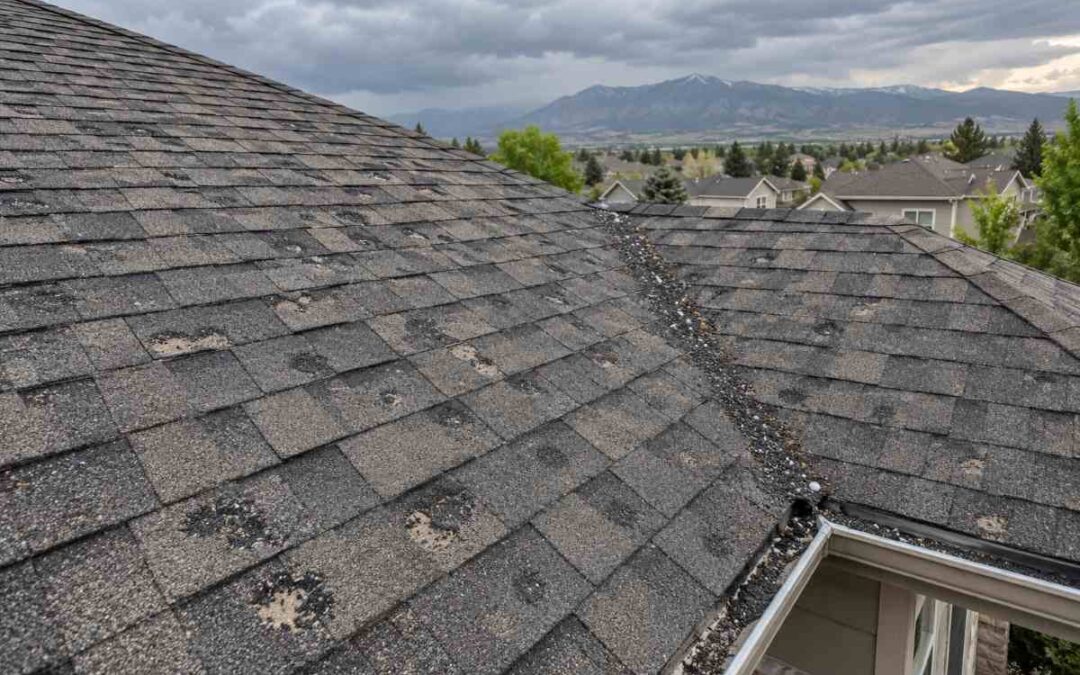
ACV and RCV are the two ways a homeowner policy calculates what it pays for a roof: actual cash value is the roof’s depreciated worth at the time of the storm, and replacement cost value is the full cost of a new roof. The difference between those two numbers is what confuses most homeowners, and it decides how much of your roof the policy pays for.
Your first insurance check is smaller than the repair estimate because the insurer subtracts two amounts: your deductible and depreciation, which climbs with the roof’s age and wear, so an older roof takes the deeper cut. On a replacement cost policy, that withheld depreciation is not gone. It is held back and paid in a second check after the roof is replaced.
That second payment is the recoverable depreciation, and it is released only after the insurer gets proof the new roof is actually on, which is the step most homeowners stall on. Colorado sees heavy hail. Each check is set by its own math, and the second one only comes once you know how to claim it.
ACV vs. RCV: What’s the Difference on a Colorado Roof Claim?
Actual cash value pays the depreciated value of your roof at the time of the hailstorm; replacement cost value pays the full cost of a new roof in two parts, withholding the depreciation until the work is done. The table below is the whole comparison in one place: what each one pays, how depreciation is treated, and which policy gives you a second check.
| Actual Cash Value (ACV) | Replacement Cost Value (RCV) | |
|---|---|---|
| What it pays | The roof’s depreciated worth at the time of loss | The full cost of a new equivalent roof |
| Depreciation | Subtracted and kept | Subtracted first, then paid back later |
| Number of checks | One | Two: an ACV check, then the depreciation check |
| Recoverable? | No, the depreciation is gone | Yes, the held depreciation is recoverable |
| Produces a holdback? | No | Yes, released after the roof is replaced |
To tell which one governs your own claim, read the loss settlement section of your policy. That section states whether a roof claim is paid at replacement cost or actual cash value, and your declarations page or a roof endorsement shows which option applies to you.
The difference decides whether you get a second check.
A replacement cost policy produces a recoverable holdback, the withheld depreciation you collect once the roof is replaced. An actual cash value policy does not. That recoverable path also closes with time, because the held depreciation stays collectible only until your policy’s repair deadline runs out.
How Your First Check Is Calculated (ACV Minus Your Deductible)
Your first check equals the full replacement estimate minus depreciation minus your deductible, so a $15,000 roof with $6,000 in depreciation and a $2,000 deductible produces a first check of $7,000. That $7,000 is the actual cash value payment, and it lands well below the estimate because two separate amounts came out before the insurer cut the check.
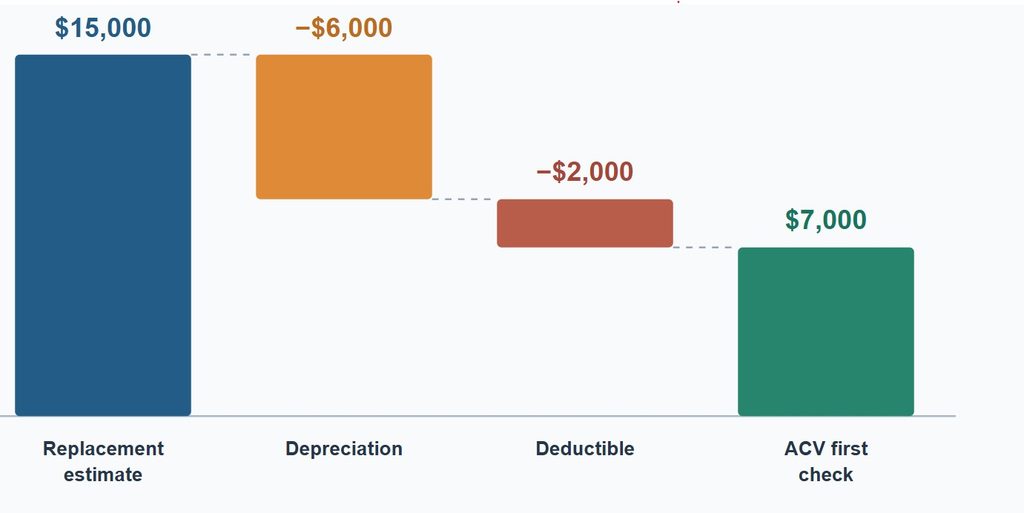
Read it as three lines on your claim summary. Start with the replacement cost estimate, subtract the depreciation the insurer assigned to your old roof, then subtract your deductible, and what remains is the ACV check. The gap between that number and the estimate is not an error.
It is the depreciation and the deductible doing exactly what the policy says they do.
The deductible is the second subtraction, and it is yours to carry. A roofing contractor paid from your insurance proceeds cannot advertise or promise to pay, waive, or rebate any part of that deductible under Colorado Revised Statutes 6-22-105, “Waiver of insurance deductible prohibited.” The rule exists because a waived deductible shifts a cost back onto the insurer that the homeowner agreed to carry. So an offer to “eat your deductible” is not a deal. It is a claim no Colorado roofer is allowed to make.
Recoverable Depreciation and the Depreciation Holdback
The depreciation an insurer withholds on a replacement cost policy is called the holdback, and it is the single largest piece of your claim still sitting unpaid after the first check. The three sections below define recoverable versus non-recoverable depreciation, walk the release process once the roof is replaced, and explain the deadline that turns that withheld money into money you never get.
What Is Recoverable vs. Non-Recoverable Depreciation?
Recoverable depreciation is the withheld portion of your payout that the insurer returns once the roof is replaced. Non-recoverable depreciation is permanently subtracted and never paid back, no matter what you do after the claim.
Recoverable depreciation is not a bonus. It is the exact gap between your first ACV check and the full replacement cost value the insurer already calculated, held in reserve until the work is done. Close that gap and you have collected the whole claim.
Three things turn that held money non-recoverable. An actual cash value policy never creates a recoverable holdback in the first place, so there is nothing to return.
Incomplete repairs forfeit it, because most policies release the depreciation only after the replacement is finished and documented. And many policies pay the depreciation only up to what the replacement actually costs, so a cheaper or reduced-scope rebuild can shrink what comes back to you.
How Do You Get the Depreciation Holdback Released?
You get the holdback released by having the roof replaced, then giving the insurer proof the work is done, which is what prompts the recoverable-depreciation check. The steps run in a fixed order, and the second check does not move until the one before it is complete.
- Have the roof replacement completed in full by your contractor, not partially or deferred.
- Assemble the final paid invoice and the completion documentation showing what was installed.
- Submit that proof to your insurer as the recoverable-depreciation request.
- Receive the holdback check for the depreciation that was withheld on the first payment.
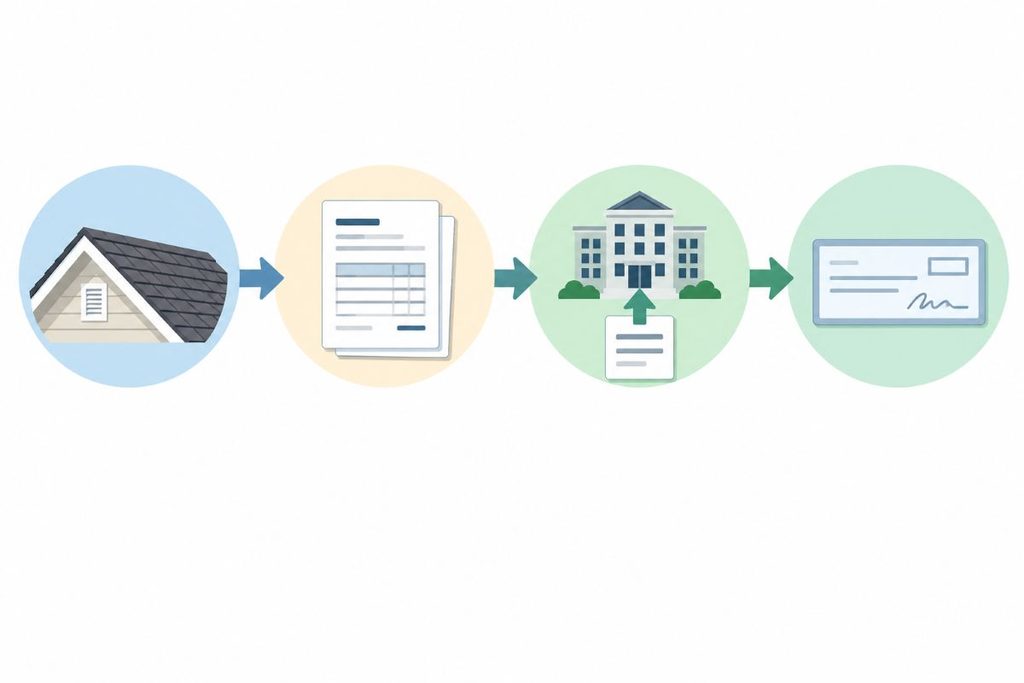
The step most homeowners skip is the second one. A first invoice or a signed contract is not proof of completion. Most carriers hold the depreciation until they see the final paid invoice and documentation that the finished roof matches the approved scope.
If the completed work turned up damage or code items the original estimate missed, that belongs in a supplement, handled separately before the holdback is squared.
What Happens If You Don’t Complete the Roof Replacement in Time?
If you never complete the replacement or miss your policy’s repair deadline, the withheld depreciation becomes non-recoverable and you keep only the ACV first check. The money is not withdrawn as a penalty. It simply never converts from held to paid, because the event that releases it, a finished and documented roof, never happens.
Your policy sets that deadline, and it varies. There is no single legal number for Colorado. Many policies allow a year or more to complete the work and claim the depreciation, and some allow two. Most will extend the window if you ask in writing before it closes.
Read your own loss settlement terms for the figure that binds you.
Missing it can cost more than the holdback. Some carriers will not renew a roof at replacement cost once a storm claim goes unrepaired, and may move it to actual cash value coverage at the next term. That leaves you paying the premium for a roof the policy now values at its depreciated worth.
What Is a Roof Payment Schedule and How Does It Change Your Payout?
A roof payment schedule is a policy endorsement that pays a wind or hail roof claim as a percentage of replacement cost, set by the roof’s age and material. It does not pay the full cost of a new roof. When it applies, it can leave little or no recoverable depreciation to collect, because it changes what the policy owes for the roof from the start.
The schedule works on a sliding scale. The older the roof, the smaller the percentage the policy pays. That reduction applies only to wind and hail damage to the roof surface, not to the rest of the house.
One carrier’s published schedule, for example, pays a 12-year-old shingle roof about half of replacement cost. The figure comes from a table, not from your actual repair bill.
That is the part that catches people. You can hold a replacement cost policy and still have your roof settled on this schedule. A holdback you were counting on may be far smaller than the gap between your first check and the estimate.
To tell whether your policy carries one, read your declarations page and your endorsement schedule. It may appear as a roof payment schedule, a roof surfacing payment schedule, or the ISO endorsement HO 04 93, the actual cash value loss settlement endorsement for windstorm or hail losses to roof surfacing. Look for your roof’s installation year, its material, and a loss-percentage table or an age-based actual cash value roof clause. If any of those appear, confirm how your roof is settled before you count on recovering the depreciation.
Why Is the Mortgage Company’s Name on My Roof Insurance Check?
Your mortgage company is named on the check because it holds a financial interest in the home that secures the loan, so you cannot cash it alone. You endorse the check to the lender first, and the lender then releases the money to pay for the roof through its own disbursement process.
The reason is the mortgagee clause in your policy. Your lender is listed as a payee because the roof is part of the collateral behind the mortgage, and the insurer protects that interest by putting the lender on any check large enough to matter. A small repair check often skips this. A full roof-replacement check usually does not.
Endorsing the check is only the first step. Once the lender has it, the servicer, not you, controls how the money comes back out, and for larger losses it does not hand over the full amount at once.
Most servicers release smaller claims in a single payment and hold larger ones for a staged, inspection-based release. A common dividing line is $40,000. At or below it, the funds often move in days. Above it, the servicer typically sends an initial installment, then releases the rest as inspections confirm the work is progressing.
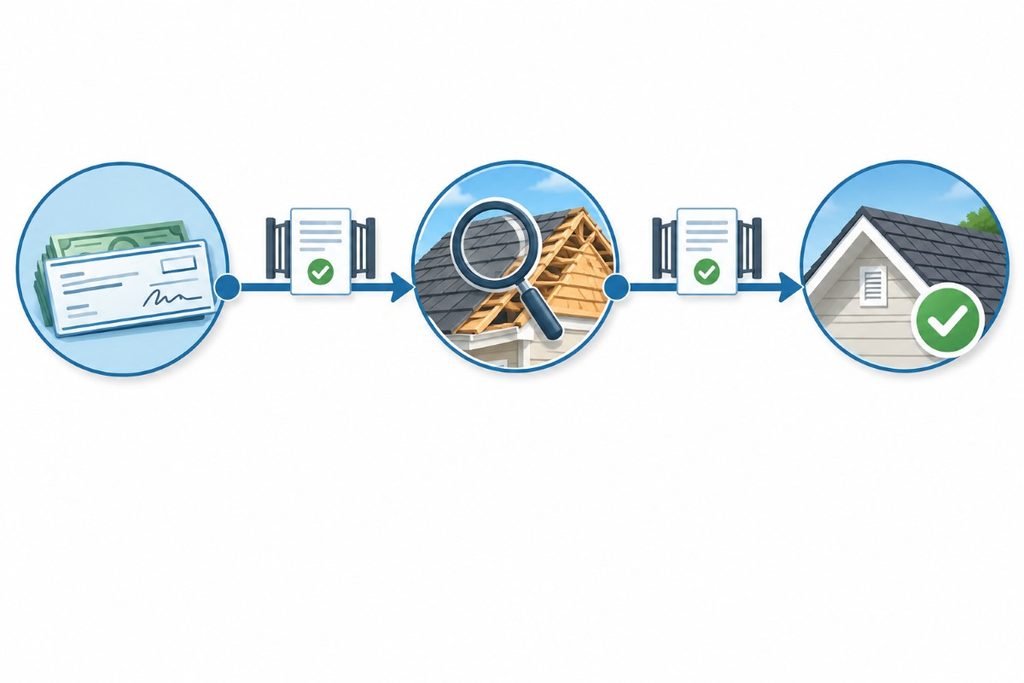
The final funds come once an inspection shows the roof is done. Plan for the money to arrive in stages, not all at once.
How Supplements Add to Your Payout After Work Starts
A supplement is an additional claim your contractor files when the approved scope turns out to be too low. It documents the hidden damage or code-required items that surface once the old roof comes off, and asks the insurer to raise the approved amount to cover them.
The trigger is something the first estimate could not see. Rotted decking under the shingles, damaged flashing, or an item current building code requires on a re-roof are common examples. Your contractor records each one with photos and measurements and submits it to the insurer as the supplement.
Approval is not automatic. Getting the insurer to agree to the added scope before that scope is built is what keeps you from paying for work the policy never approved.
A supplement does not just add a line at the end. Because your ACV check and your recoverable depreciation are both calculated from the approved replacement estimate, raising that estimate raises both of them. The first check grows, and so does the holdback waiting to be released when the larger job is finished.
How to Dispute a Low Depreciation Figure or Payout in Colorado
You dispute a low depreciation figure by asking the carrier how it was calculated, countering it with your own evidence, and escalating through your policy and then the state if the gap holds. Each step builds the record the next one needs, so the order matters.
Work the dispute in this sequence:
- Ask the carrier, in writing, for the method and the numbers behind the depreciation it applied.
- Counter that figure with roof maintenance records and receipts that show the roof’s real condition and age.
- Add an independent replacement estimate from a licensed contractor to challenge an understated scope or cost.
- Invoke your policy’s appraisal clause when the gap persists, which sends the dispute to independent appraisers.
- File a complaint with the Colorado Division of Insurance if the insurer still will not resolve it.
The appraisal clause and the regulator are two different tools. Appraisal is a provision in your own policy that resolves a value dispute through independent appraisers. The Colorado Division of Insurance is the state agency that licenses and regulates insurers and investigates consumer complaints about their conduct.
A complaint puts the matter in front of the regulator, but it does not guarantee a reversal. What it does is create a documented record the insurer has to answer.

Recent Comments