
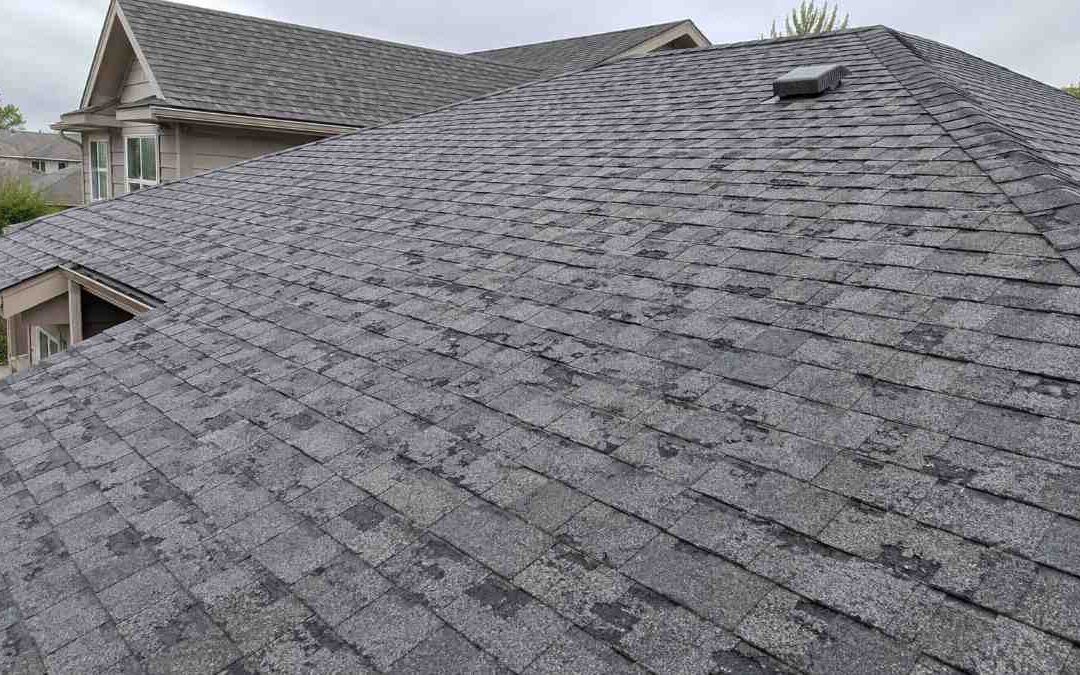
A denied roof insurance claim is an insurer’s written decision to reject payment for storm or hail damage, in whole or in part. The reason usually comes down to one of three things: how the damage was caused, what the policy language allows, or how the claim was filed. Most Colorado denials turn on that first one. On a hail-damaged roof, the fight is usually over one thing: whether a storm bruised the shingle mat and knocked granules loose, or whether the bare spots are just age the policy never promised to pay for.
Colorado’s Front Range sits in Hail Alley, the zone that records the highest frequency of large hail in North America, with the eastern plains averaging seven to nine hail days a year. Homeowners across Douglas, Arapahoe, and Jefferson Counties file storm claims often, and denials come with the territory. The denial is not the last word. It is a documented decision a homeowner can question, re-inspect, and challenge through several defined channels.
This page answers the two questions a denial raises. First, why insurers deny hail and storm roof claims: wear-and-tear arguments, cosmetic exclusions, and filing problems that have nothing to do with the roof. Second, how a Colorado homeowner appeals, through re-inspection, the policy’s appraisal clause, a complaint to the state regulator, and the bad-faith standard for denials that cross a legal line. The goal is simple. You should finish able to read your own denial letter and judge what to do next.
What Does a Denied Roof Insurance Claim Actually Mean?
A denied roof insurance claim is a written insurer decision rejecting payment, and it takes three forms: a full denial (no coverage at all), a partial denial (some of the repair scope rejected), and an underpayment (coverage granted but priced below the true cost to fix the roof). Each one can be challenged. Most Colorado hail denials are not a flat no.
The three forms differ in what the insurer actually refused, and that changes how you respond:
- Full denial means the insurer rejected the claim entirely, usually arguing no covered damage occurred or that an exclusion applies to the whole loss.
- Partial denial means the insurer approved part of the scope and rejected the rest, often paying for a slope or two while denying the full replacement a contractor documented.
- Underpayment means coverage was granted but the dollar figure falls short, frequently because the payout was calculated on actual cash value (ACV), the depreciated worth of the roof, rather than replacement cost value (RCV), the full price to rebuild it today.
That ACV-versus-RCV gap is where a lot of “denials” actually live. On an RCV policy, the insurer withholds part of the payment as recoverable depreciation and releases it only after the work is done and invoiced. The first check is not the final number. A homeowner who reads it that way can mistake a normal two-stage payout for a shortfall. Partial denials and underpayments outnumber outright rejections on Colorado hail claims, and a partial no is usually the easier decision to move.
Reading the denial letter is the first real step, because the letter tells you which fight you are in. Two things on that page decide your entire strategy: the stated reason for the denial, and the specific policy provision the insurer cites to support it. Find both. The reason tells you whether the insurer is arguing causation, exclusion, or paperwork, and the cited provision tells you exactly which policy language you have to answer. A denial that hangs on a cosmetic-damage exclusion demands a different response than one built on a late-filing clause or a low hail-hit count. That is the map. Match your evidence to the reason and the provision the insurer named, not to a general sense that the denial was unfair.
Why Do Insurers Deny Hail and Storm Roof Claims?
Most Colorado roof denials rest on one of three damage arguments: that the damage is old wear rather than storm impact, that a cosmetic damage exclusion applies, or that the number of hail hits fell below the insurer’s replacement threshold. Each argument attacks the claim at a different point, and each one has a specific answer.
Is My Roof Damage Wear and Tear or Storm Damage?
Insurers deny by arguing the damage is gradual wear rather than a specific storm event, but the question that decides coverage is narrower than whether the roof was flawless. It is whether the storm caused new damage that warrants repair. A roof can be ten years old, sun-worn, and still take covered hail damage in a single afternoon. The adjuster’s wear argument leans on what was already there: granule thinning from years of UV exposure, the surface cracking that comes from Colorado’s freeze-thaw cycling, the ordinary aging every roof carries. None of that ages a fresh bruise.
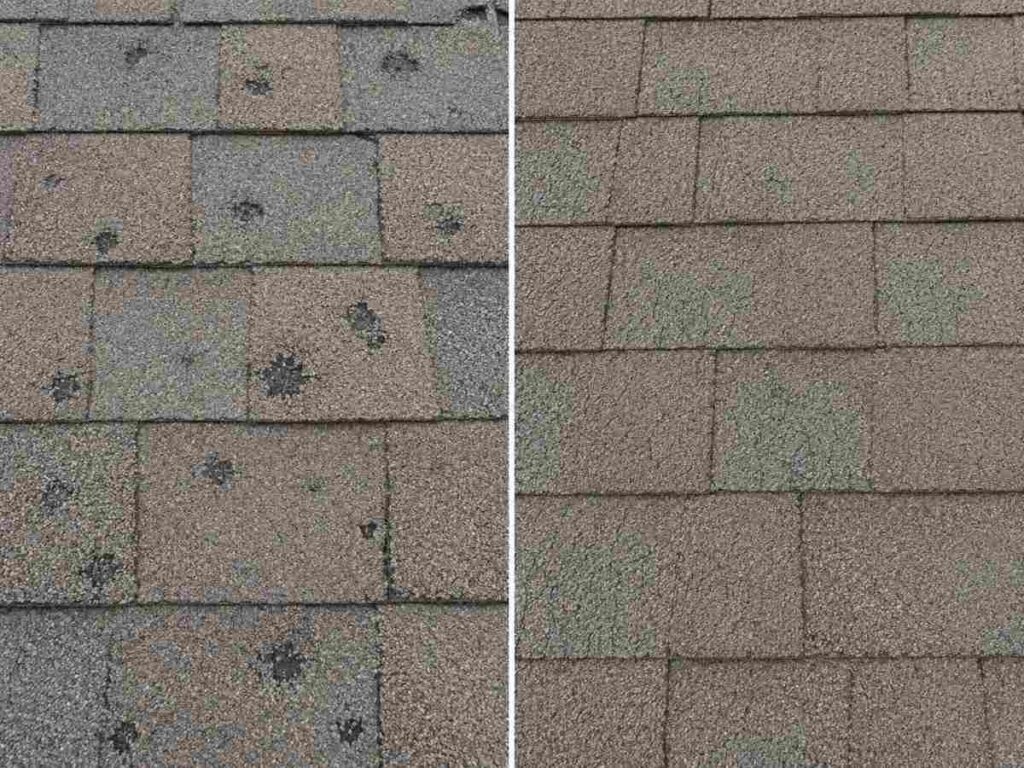
Storm damage reads differently on the shingle, and that is where the argument turns. A trained inspector separates storm bruising from wear by pattern and freshness: soft spots where a hailstone fractured the mat under the surface, granule loss in scattered impact points rather than uniform thinning, and breaks that expose asphalt still dark instead of sun-faded. The question is narrower than that. Not “is this roof old,” but “did this storm add damage the policy covers.” A denial built on the aging argument is answerable when the inspection documents fresh, storm-pattern impact the adjuster’s report treated as pre-existing wear.
What Is a Cosmetic Damage Exclusion on a Colorado Policy?
A cosmetic damage exclusion lets the insurer agree that hail struck the roof and still deny the claim, on the ground that the marks are only surface-deep and do not affect how the roof works. Coverage turns on function, not appearance. Under this exclusion, a dented metal panel or a bruised shingle that still sheds water is treated as an aesthetic issue the policy carved out. The exclusion usually appears as its own labeled provision or endorsement on the declarations page, often tied to specific roof types. Read whether your policy carries one at all, because many Colorado policies added cosmetic exclusions as hail losses climbed.
An impact-resistant roof does not clear this exclusion, and homeowners are often surprised by that. A Class 4 rating under UL 2218, the highest impact class, means the shingle survived a two-inch steel ball dropped from twenty feet without cracking through the mat. That test measures one thing: whether the material fractures under impact. It says nothing about whether your policy pays for the dents and granule loss that impact leaves behind. The rating certifies the product, and the exclusion governs the coverage. A Class 4 roof can take real hail, pass its rating, and still land a cosmetic denial if the exclusion applies and the damage reads as surface-only.
What Counts as Insufficient Hail Damage for a Roof Claim?
An insufficient-damage denial means the adjuster counted fewer qualifying hail hits than the insurer’s replacement threshold, measured inside a test square. The count decides the slope. Adjusters mark a ten-by-ten-foot section, one hundred square feet, on a slope and tally the impacts that fracture the shingle mat rather than the ones that only marked the surface. Carriers set their own bar for how many hits per square justify replacing that slope, commonly around eight, though the number varies by insurer and by roof material. Fall short in the tested square and the slope gets denied.
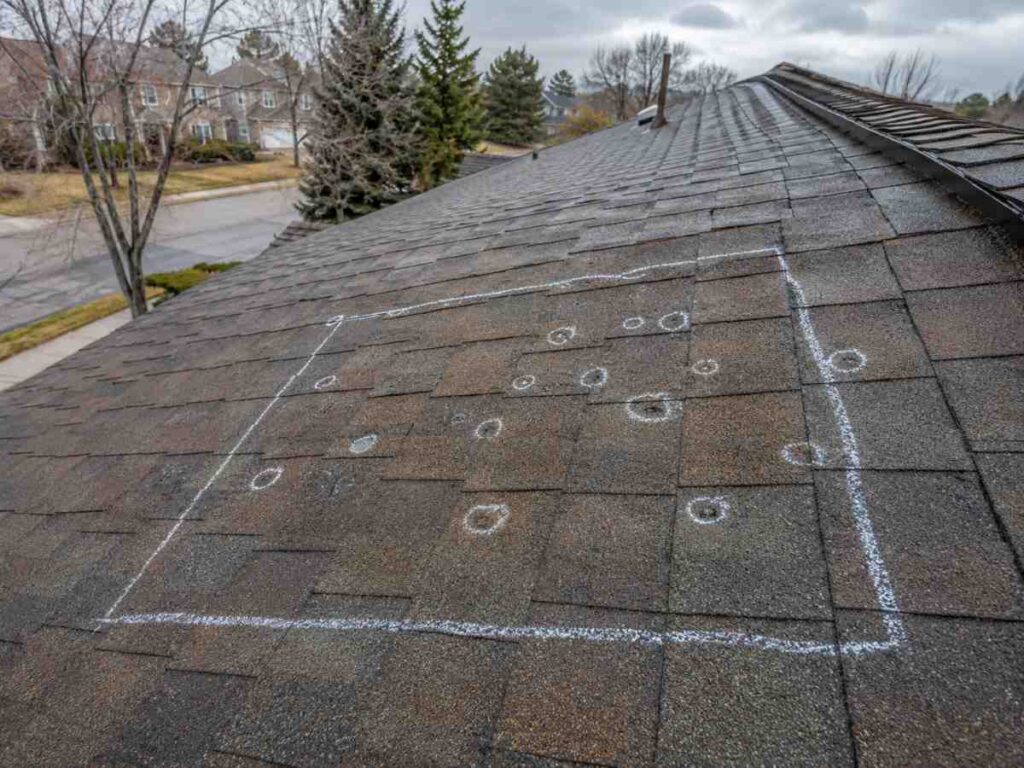
A low count is often a sampling problem, not a sound roof, and that is the opening. Two things sink these inspections: a square chalked on the least-damaged part of the slope, and slopes the adjuster never tested at all. Hail rarely lands evenly. A facet the adjuster skipped can carry double the hits of the one square that set the denial, which is why a slope-by-slope re-count by an independent contractor changes so many of these outcomes. The rebuttal is not an argument that the adjuster was wrong to count. It is a fuller count, documented square by square across every slope, that shows the damage the first inspection missed.
What Policy and Filing Problems Trigger a Denial?
A roof claim can be denied for reasons that have nothing to do with the damage itself: filing after the policy’s claim window, a policy that was lapsed or inactive on the date of loss, or an argument that the damage was there before the storm. These denials turn on documentation dates, not roof condition. The roof can be genuinely storm-damaged and the claim still fails on a calendar or a paperwork gap.
Filing deadlines are the first trap. Most Colorado policies require notice “as soon as practicable,” and most carriers set a practical reporting deadline of roughly one year from the date of loss. The exact window is written into your individual policy, and some carriers set it shorter. Read your own declarations page for the number that applies to you.
Prompt filing protects the claim for a concrete reason. The evidence a challenge depends on decays with time: a storm of record gets harder to tie to your address, fresh bruising weathers into something an adjuster can call ordinary aging, and another season on the roof adds damage that muddies the causation question. Time works against the claim. File as soon as an inspection confirms you have one.
Coverage gaps defeat a claim before the damage is ever weighed. Three show up most often on Colorado roof denials, and each has a specific rebuttal:
- Policy lapse means the policy was not active on the loss date, usually from a missed premium or a cancellation the homeowner did not register. The rebuttal is proof the policy was in force on the storm date, which the carrier’s own records will show.
- Pre-existing damage is the argument that the roof was already damaged before the claimed storm. Dated prior inspection reports, real estate photos, or a roofer’s earlier records rebut it by establishing the roof’s condition before the loss.
- Maintenance neglect exclusion lets the insurer deny damage it attributes to deferred upkeep rather than a covered event. The rebuttal separates storm impact from the neglected condition, showing the storm caused new damage regardless of the roof’s maintenance history.
Dates decide these. Every rebuttal rests on the same thing: documentation that fixes the roof’s condition and the policy’s status to specific dates. A proof of loss backed by dated evidence is what moves a procedural denial. A general assertion that the denial was unfair is not.
How Do You Read and Respond to the Denial Letter?
The first response to a roof denial is to get the decision in writing with the exact policy language it relies on, then commission an independent roof inspection to document what the adjuster’s report missed. Those two steps produce the evidence every later challenge depends on. Everything after this, re-inspection, appraisal, a regulatory complaint, is built on the record these first moves create.
A written denial that cites specific policy language is non-negotiable, because it fixes exactly what you have to answer. The letter should name the reason and quote the provision the insurer applied. That tells you whether you are fighting a causation call, an exclusion, or a filing problem.
A vague denial is a weak denial. If the reason is general or the letter never cites a provision, you can request a detailed written explanation, and the insurer has to give one.
Get it in writing. A verbal denial over the phone leaves you nothing to appeal and no record of what was decided. Put the request for a written decision in an email you keep.
The independent inspection is where the counter-record gets built, and it matters because the adjuster’s report is not neutral. That adjuster works for the carrier, often scopes the roof in a short visit, and builds the estimate in Xactimate, where the payout is only as complete as the line items entered and the slopes actually walked. You need a second set of eyes that knows what storm damage looks like.
An independent contractor walks every slope and photographs each qualifying hit. That captures what a desk-scoped report leaves out: storm bruising on north-facing slopes, wind creasing under shingle tabs, granule-loss patterns the first inspection wrote off as age. That gap is the case. The report, paired with dated photos and the storm-of-record data, becomes what a re-inspection is argued from. It works best when the contractor is on the roof during that second visit, pointing to the conditions the original adjuster never recorded.
How Do You Appeal a Denied Roof Claim in Colorado?
Colorado homeowners have three escalation paths after a roof denial: a re-inspection with a supplement, invoking the policy’s appraisal clause, and filing a complaint with the Colorado Division of Insurance. They run from least to most adversarial, and they can run in sequence.
How Does a Roof Claim Re-Inspection and Supplement Work?
A re-inspection sends a second adjuster to the roof, ideally with your contractor there, and a supplement is the formal document that submits new photos, measurements, and scope to answer the original denial reason. Most legitimate denials are overturned at this stage, not in court. The sequence is straightforward:
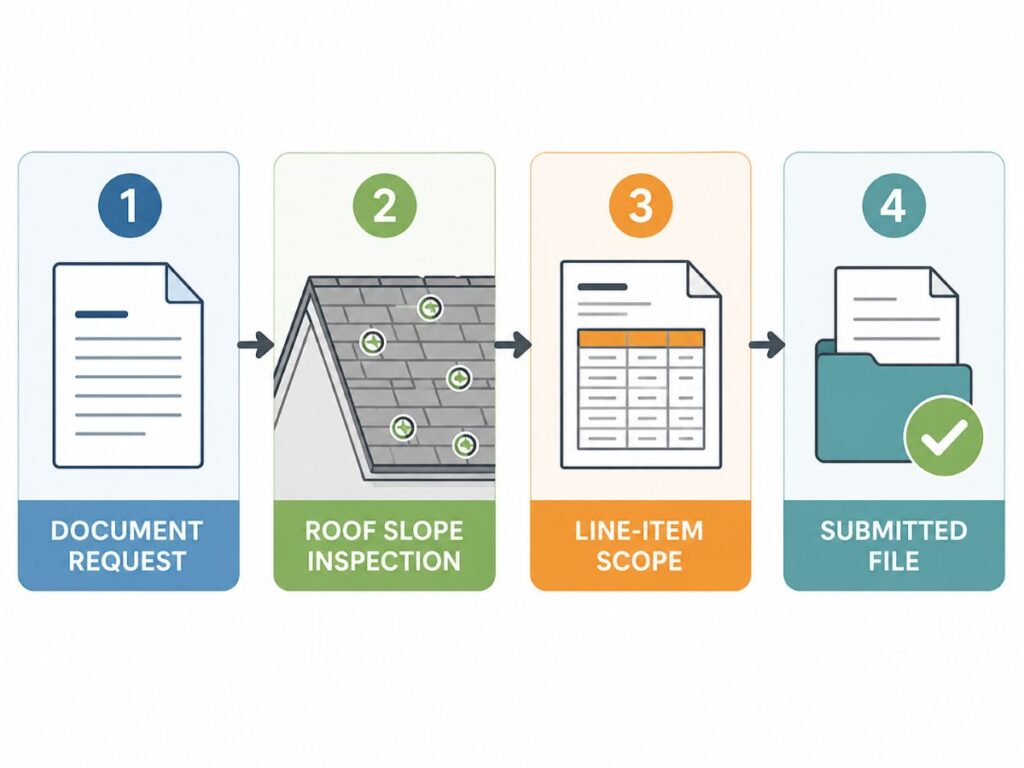
- Request the re-inspection in writing, naming the denial reason you intend to rebut and asking that your contractor be present on the roof.
- Have your contractor document every slope, with dated photos of each qualifying hit and measurements the first inspection left out.
- Prepare the supplement as a line-item scope, matching the format the carrier prices in, so the new items map directly to what was missing.
- Submit the supplement with the inspection report and storm-of-record data attached, and track the carrier’s response in writing.
Contractor presence is the part that changes outcomes. A desk reviewer working from the first adjuster’s photos cannot see what was never photographed, so a re-inspection where your contractor stands on the roof and points to the missed damage puts those conditions into the record directly. The supplement then argues in the carrier’s own line-item language rather than in general disagreement. That is why this path settles most denials without escalation.
What Is the Appraisal Clause and When Do You Use It?
The appraisal clause is a provision in most property policies that settles a dispute over the amount of a loss by having each side name an appraiser and a neutral umpire resolve the gap. It applies when coverage is agreed but the dollar figure is contested, and it is faster and cheaper than a lawsuit. You and the insurer each pick a competent, impartial appraiser, the two appraisers select an umpire, and when any two of the three agree on a number, that becomes the binding award. Each side pays its own appraiser and splits the umpire’s cost.
The limit is what makes this path specific, and it is easy to get wrong. Appraisal decides the amount of loss, not coverage. That distinction is the catch. If the insurer agrees your roof is covered but values the damage at half what your contractor scoped, appraisal is built for exactly that fight. If the insurer flatly denied coverage, saying the damage is wear, or cosmetic, or excluded, appraisal cannot help you, because there is no agreed loss to value. A coverage denial is a legal dispute, not a valuation one, which is why appraisal is the right tool for an underpayment and the wrong tool for an outright no.
How Do You File a Complaint With the Colorado Division of Insurance?
You file a complaint with the Colorado Division of Insurance through its online Consumer Portal, uploading your policy, the denial letter, and your supporting documentation. The Division sits within Colorado’s Department of Regulatory Agencies (DORA) and regulates insurers operating in the state, including how they handle claims. The process runs in a set order:
- Exhaust the insurer’s internal appeal first, because the Division expects you to have given the carrier a chance to resolve the dispute.
- Create a Consumer Portal account at the Division’s website and complete the complaint pages, describing the denial factually with dates and policy numbers.
- Submit the complaint to receive a Complaint ID, then upload the policy, denial letter, inspection report, and correspondence.
- Track the Division’s response through the portal, where you can add comments and see the insurer’s reply.
Know what the complaint can and cannot do. The Division investigates unfair claim-handling practices and can press an insurer to justify its decision, which sometimes prompts a reconsideration the carrier would not have offered on its own. It does not act as your lawyer, and it cannot order the insurer to pay a specific amount on a contested valuation. The complaint’s real weight is the official record it creates. A documented pattern of unfair handling is what the Division acts on, and that record also strengthens your position if the dispute later moves to appraisal or court.
When Is a Roof Claim Denial “Bad Faith” Under Colorado Law?
A roof denial crosses into a legal violation when the insurer denies or delays a covered claim without a reasonable basis for doing so. At that point Colorado law lets the homeowner recover beyond the claim itself, including two times the covered benefit plus attorney fees and court costs.
The standard that matters is whether the insurer had a reasonable basis. If the insurer denied or delayed paying a covered benefit without one, the denial was unreasonable under Colorado’s Improper Denial of Claims statute, CRS §10-3-1115. The homeowner filing the claim is the “first-party claimant” the statute protects.
The bar is lower than it sounds. A common-law bad-faith claim requires proving the insurer knew or recklessly disregarded that it was acting unreasonably, but the statutory claim drops that second element. You show the denial lacked a reasonable basis, not that the insurer knew it was wrong. That is a meaningful difference when the insurer’s own file shows it ignored your inspection or misread the storm date.
The remedy is what gives the standard teeth. A first-party claimant whose covered benefit was unreasonably delayed or denied can sue in district court to recover reasonable attorney fees and court costs and two times the covered benefit, under CRS §10-3-1116. The “covered benefit” is the amount the policy owed on the claim the insurer refused.
The deadline is not settled. Colorado’s appellate courts have rejected the shortest, one-year framing for these claims, but the precise limitation period remains unsettled in the case law, and different deadlines can apply depending on how the claim is characterized. Do not treat any single number as your cutoff. If you think your denial was unreasonable, confirm your actual deadline with a Colorado attorney before it runs, because the statutory remedy is worth protecting.
What Can Your Roofing Contractor Legally Do on Your Claim?
In Colorado, a roofing contractor can document the damage, prepare a repair estimate, and discuss the scope of repairs with your insurer, once the contractor has a valid written contract with you. A contractor cannot act as a public adjuster, and cannot pay, waive, or rebate any part of your deductible.
Start with what a contractor is allowed to do. Documenting damage and writing a detailed repair estimate are ordinary contractor work, and Colorado’s roofing statute specifically permits a contractor to discuss the scope of repairs with your insurer on your behalf, under CRS §6-22-105. That permission has one condition attached.
The contract is the key. The statute allows scope discussion only when the contractor holds a valid written contract with you, the property owner, for the roofing work. Without that signed contract in place, a contractor has no standing to talk scope with your carrier. This is why a legitimate contractor puts the agreement in writing before stepping into the claim conversation.
There are two hard lines the same statute draws, and both protect you. A roofing contractor cannot claim to be or act as a public insurance adjuster, because adjusting a claim is a separate licensed role under Colorado law. And a contractor cannot pay, waive, or rebate any part of your deductible, by any method.
The deductible is yours to pay. Under §6-22-105, no contractor may cover it, absorb it into an inflated line item, or hand it back to you after the job, and the offer rarely sounds like a waiver: it sounds like “I’ll match the insurance number” or “you won’t pay a dime out of pocket.” A contractor who offers to make your deductible disappear is offering to break the law, and the statute lets your insurer disregard that contractor’s estimate and lets you or the insurer sue for the damage it causes. The deductible is a fixed part of your policy, and it stays your obligation no matter who does the work.
Should You Accept the Denial or Keep Fighting It?
A roof denial is worth challenging when three things line up: you have documentation tied to the storm date, the damage is functional rather than cosmetic-only, and the loss date matches a known hail event. It is more likely a valid denial when the policy had lapsed, the filing window had already closed, or no storm of record hit your address. Run your own denial against both lists before you decide.
The signals sort a denial into worth-fighting or probably-final:
- Challenge it when the damage fractures the mat or breaks the seal, you have dated photos and an independent inspection, and a documented storm hit your area on or near your claimed loss date.
- Think harder when the only damage is surface marks a cosmetic exclusion would cover, your documentation is thin, or the storm you are claiming does not show up in the record for your address.
- Treat it as likely valid when the policy was not active on the loss date, the reporting deadline had passed before you filed, or no hail or wind event of record matches your date at all.
The signals point one way or the other. A denial that fails on paperwork, a lapse, a missed window, no storm of record, is usually final, because those are facts a challenge cannot rewrite. A denial that turns on a damage judgment call is the one worth pressing, because that is where a fuller inspection and a verified storm date change the answer.
Colorado’s geography tilts the odds toward verifiability. The Front Range sits in Hail Alley, and Douglas, Arapahoe, and Jefferson Counties get hit often enough that a real storm usually left a record you can pull from NOAA’s storm database to confirm the event happened near your address. That works in your favor on the causation question. The clock does not. Reporting windows run fast, and the evidence that proves your case weathers with every month that passes, so a denial worth challenging is worth challenging now, not after another season has blurred the storm date you are standing on.

Recent Comments